Sun, Y., H. Zhang,
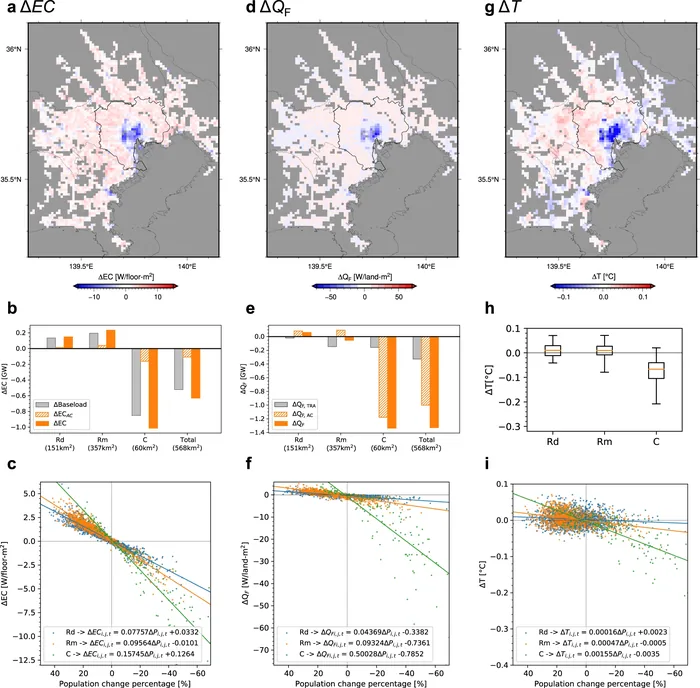
Y. Takane, K. Yamaguchi, and T. Ihara, 2026: Rooftop photovoltaics and energy equity: quantifying socio-energy trade-offs in urban energy transitions.
Applied Energy,
424, 128440. doi:
10.1016/j.apenergy.2026.128440
Sun, Y., H. Zhang, Y. Takane, K. Yamaguchi, & T. Ihara (2026). Rooftop photovoltaics and energy equity: quantifying socio-energy trade-offs in urban energy transitions.
Applied Energy, 424, 128440.
https://doi.org/10.1016/j.apenergy.2026.128440.
Yamasaki, L., C. F. S. Ng, A. Tobias,
Y. Takane, K. Yamaguchi, and M. Hashizume,
2026:
Air conditioning use and ambulance transports for heat-related illness across summer months in the Tokyo Metropolitan Area.
Environment & Health,
in press.
doi:
10.1021/envhealth.5c00808
Yamasaki, L., C. F. S. Ng, A. Tobias, Y. Takane , K. Yamaguchi, and M. Hashizume (2026). Air conditioning use and ambulance transports for heat-related illness across summer months in the Tokyo Metropolitan Area.
Environment & Health, in press.
https://doi.org/10.1021/envhealth.5c00808.
Park, C.Y., V.L.H. Phung, K. Nakajima,
Y. Takane, and H. Kondo,
2026:
Heat-related mortality mapping to inform heat adaptation measures.
Landscape and Ecological Engineering,
22,
211–223.
doi:
10.1007/s11355-026-00701-z
Park, C.Y., V.L.H. Phung, K. Nakajima, Y. Takane , and H. Kondo (2026). Heat-related mortality mapping to inform heat adaptation measures.
Landscape and Ecological Engineering, 22 , 211–223.
https://doi.org/10.1007/s11355-026-00701-z.
Nemoto, M., K. Yamaguchi,
Y. Takane, T. Suzuki, Y. Kokubu, and T. Ihara,
2026:
Modeling outdoor heatstroke morbidity to improve urban climate adaptation strategies.
SOLA,
22,
5.
doi:
10.1007/s44393-025-00005-9
Nemoto, M., K. Yamaguchi, Y. Takane , T. Suzuki, Y. Kokubu, and T. Ihara (2026). Modeling outdoor heatstroke morbidity to improve urban climate adaptation strategies.
SOLA, 22 , 5.
https://doi.org/10.1007/s44393-025-00005-9.
Sun, Y.,
Y. Takane, K. Yamaguchi, and T. Ihara,
2026:
The photovoltaic heat island effect in Tokyo: Morphological dependence and spatiotemporal dynamics of PV-induced urban warming.
Building and Environment,
288,
113941.
doi:
10.1016/j.buildenv.2025.113941
Sun, Y., Y. Takane , K. Yamaguchi, and T. Ihara (2026). The photovoltaic heat island effect in Tokyo: Morphological dependence and spatiotemporal dynamics of PV-induced urban warming.
Building and Environment, 288 , 113941.
https://doi.org/10.1016/j.buildenv.2025.113941.
Yamaguchi, K.,
Y. Takane, and T. Ihara,
2025:
Urban cooling and CO
2 reduction potentials of mass deployment of heat pump water heaters in Tokyo.
Urban Climate,
61,
102374.
doi:
10.1016/j.uclim.2025.102374
Yamaguchi, K., Y. Takane , and T. Ihara (2025). Urban cooling and CO 2 reduction potentials of mass deployment of heat pump water heaters in Tokyo.
Urban Climate, 61 , 102374.
https://doi.org/10.1016/j.uclim.2025.102374.
Meili, N., X. Zheng,
Y. Takane, K. Nakajima, K. Yamaguchi, D. Chi, Y. Zhu, J. Wang, Y. Qiu, A. Paschalis, G. Manoli, P. Burlando, T. Puay Yok, and S. Fatichi, 2025: Modeling the effect of trees on energy demand for indoor cooling and dehumidification across cities and climates.
Journal of Advances in Modeling Earth Systems,
17, e2024MS004590. doi:
10.1029/2024MS004590
Meili, N., X. Zheng, Y. Takane , K. Nakajima, K. Yamaguchi, D. Chi, Y. Zhu, J. Wang, Y. Qiu, A. Paschalis, G. Manoli, P. Burlando, T. Puay Yok, and S. Fatichi (2025). Modeling the effect of trees on energy demand for indoor cooling and dehumidification across cities and climates.
Journal of Advances in Modeling Earth Systems, 17 , e2024MS004590.
https://doi.org/10.1029/2024MS004590.
Ohashi, Y., K. Nakajima,
Y. Takane, Y. Kikegawa, T. Ihara, and K. Oka,
2025:
Predicting the reduction in heatstroke and heart disease-related mortality under urban modification scenarios using machine learning.
Environmental Research: Health,
3,
025001.
doi:
10.1088/2752-5309/ada96e
Ohashi, Y., K. Nakajima, Y. Takane , Y. Kikegawa, T. Ihara, and K. Oka (2025). Predicting the reduction in heatstroke and heart disease-related mortality under urban modification scenarios using machine learning.
Environmental Research: Health, 3 , 025001.
https://doi.org/10.1088/2752-5309/ada96e.
Takane, Y., Kikegawa. K. Nakajima, and H. Kusaka,
2024:
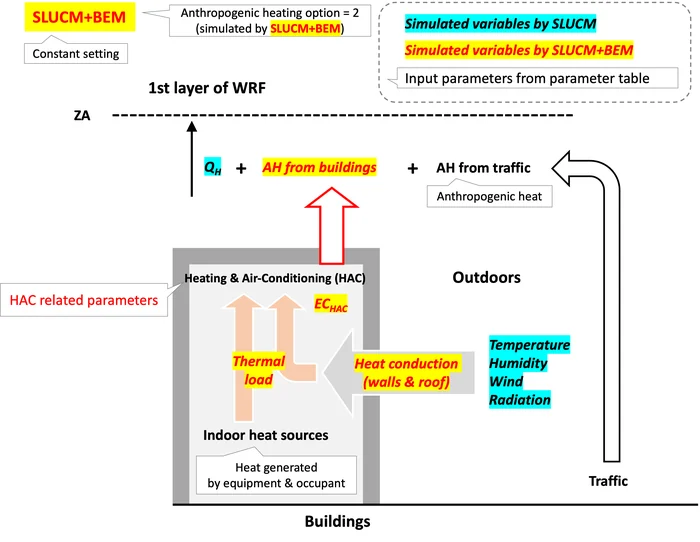
SLUCM+BEM (v1.0): a simple parameterisation for dynamic anthropogenic heat and electricity consumption in WRF-Urban (v4.3.2).
Geoscientific Model Development,
17,
8639-8664.
doi:
10.5194/gmd-17-8639-2024
Takane, Y. , Kikegawa. K. Nakajima, and H. Kusaka (2024). SLUCM+BEM (v1.0): a simple parameterisation for dynamic anthropogenic heat and electricity consumption in WRF-Urban (v4.3.2).
Geoscientific Model Development, 17 , 8639-8664.
https://doi.org/10.5194/gmd-17-8639-2024.
Langendijk, G. S., T. Halenka, P. Hoffmann, M. Adinolfi, A. A. Campino, O. Asselin, S. Bastin, B. Bechtel, M. Belda, A. Bushenkova, A. Campanale, K. P. Chun, K. Constantinidou, E. Coppola, M. Demuzere, Q.-V. Doan, J. Evans, H. Feldmann, J. Fernandez, L. Fita, P. Hadjinicolaou, R. Hamdi, M. Hundhausen, D. Grawe, F. Johannsen, J. Milovac, E. Katragkou, N. El I. Kerroumi, S. Kotlarski, B. Le Roy, A. Lemonsu, C. Lennard, M. Lipson, S. Mandal, L. E. M. Pabón, V. Pavlidis, J.-P. Pietikäinen, M. Raffa, E. Raluy-López, D. Rechid, R. Ito, J.-P. Schulz, P. M.M. Soares,
Y. Takane, C. Teichmann, M. Thatcher, S. Top, B. V. Schaeybroeck, F. Wang, and J. Yuan,
2024:
Towards better understanding the urban environment and its interactions with regional climate change - The WCRP CORDEX Flagship Pilot Study URB-RCC.
Urban Climate,
58,
102165.
doi:
10.1016/j.uclim.2024.102165
Langendijk, G. S., T. Halenka, P. Hoffmann, M. Adinolfi, A. A. Campino, O. Asselin, S. Bastin, B. Bechtel, M. Belda, A. Bushenkova, A. Campanale, K. P. Chun, K. Constantinidou, E. Coppola, M. Demuzere, Q.-V. Doan, J. Evans, H. Feldmann, J. Fernandez, L. Fita, P. Hadjinicolaou, R. Hamdi, M. Hundhausen, D. Grawe, F. Johannsen, J. Milovac, E. Katragkou, N. El I. Kerroumi, S. Kotlarski, B. Le Roy, A. Lemonsu, C. Lennard, M. Lipson, S. Mandal, L. E. M. Pabón, V. Pavlidis, J.-P. Pietikäinen, M. Raffa, E. Raluy-López, D. Rechid, R. Ito, J.-P. Schulz, P. M.M. Soares, Y. Takane , C. Teichmann, M. Thatcher, S. Top, B. V. Schaeybroeck, F. Wang, and J. Yuan (2024). Towards better understanding the urban environment and its interactions with regional climate change - The WCRP CORDEX Flagship Pilot Study URB-RCC.
Urban Climate, 58 , 102165.
https://doi.org/10.1016/j.uclim.2024.102165.
Kawase, H., T. Ito, Y. Sakamoto, and
Y. Takane,
2024:
Impacts of local topography on snowfall distribution in the Kanto Plain: A case study.
SOLA,
20,
323-330.
doi:
10.2151/sola.2024-043
Kawase, H., T. Ito, Y. Sakamoto, and Y. Takane (2024). Impacts of local topography on snowfall distribution in the Kanto Plain: A case study.
SOLA, 20 , 323-330.
https://doi.org/10.2151/sola.2024-043.
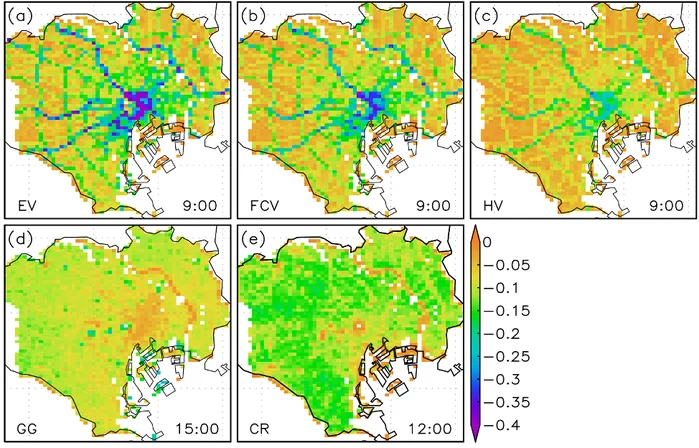
Yamaguchi, K.,
Y. Takane, and T. Ihara,
2024:
Climate change adaptation and mitigation potential of EVs in Tokyo Metropolitan Area.
Urban Climate,
55,
101859.
doi:
10.1016/j.uclim.2024.101859
Yamasaki, L., Kamada, T., C. F. S. Ng,
Y. Takane, K. Nakajima, K. Yamaguchi, K. Oka, Y. Kim, and M. Hashizume,
2024:
Heat-related mortality and ambulance transport after a power outage in the Tokyo metropolitan area.
Environmental Epidemiology,
8,
e292.
doi:
10.1097/EE9.0000000000000292
Yamasaki, L., Kamada, T., C. F. S. Ng, Y. Takane , K. Nakajima, K. Yamaguchi, K. Oka, Y. Kim, and M. Hashizume (2024). Heat-related mortality and ambulance transport after a power outage in the Tokyo metropolitan area.
Environmental Epidemiology, 8 , e292.
https://doi.org/10.1097/EE9.0000000000000292.
Chua, P. L. C.,
Y. Takane, C. F. S. Ng, K. Oka, Y. Honda, Y. Kim, and M. Hashizume,
2023:
Net impact of air conditioning on heat-related mortality in Japanese cities.
Environmental International,
181,
108310.
doi:
10.1016/j.envint.2023.108310
Chua, P. L. C., Y. Takane , C. F. S. Ng, K. Oka, Y. Honda, Y. Kim, and M. Hashizume (2023). Net impact of air conditioning on heat-related mortality in Japanese cities.
Environmental International, 181 , 108310.
https://doi.org/10.1016/j.envint.2023.108310.
Lipson, M., C. S. B. Grimmond, M. Best, G. Abramowitz, A. Coutts, N. Tapper, J.-J. Baik, M. Beyers, L. Blunn, S. Boussetta, E. Bou-Zeid, M. G. De Kauwe, C. de Munck, M. Demuzere, S. Fatichi, K. Fortuniak, B.-S. Han, M. Hendry, Y. Kikegawa, H. Kondo, D.-Il Lee, S.-H. Lee, A. Lemonsu, T. Machado, G. Manoli, A. Martilli, V. Masson, J. McNorton, N. Meili, D. Meyer, K. A. Nice, K. W. Oleson, S.-B. Park, M. Roth, R. Schoetter, A. Simón-Moral, G.-J. Steeneveld, T. Sun,
Y. Takane, M. Thatcher, A. Tsiringakis, M. Varentsov, C. Wang, Z.-H. Wang, and A. Pitman,
2023:
Evaluation of 30 urban land surface models in the Urban-PLUMBER project: Phase 1 results.
Quarterly Journal of the Royal Meteorological Society,
150,
126–169.
doi:
10.1002/qj.4589
Lipson, M., C. S. B. Grimmond, M. Best, G. Abramowitz, A. Coutts, N. Tapper, J.-J. Baik, M. Beyers, L. Blunn, S. Boussetta, E. Bou-Zeid, M. G. De Kauwe, C. de Munck, M. Demuzere, S. Fatichi, K. Fortuniak, B.-S. Han, M. Hendry, Y. Kikegawa, H. Kondo, D.-Il Lee, S.-H. Lee, A. Lemonsu, T. Machado, G. Manoli, A. Martilli, V. Masson, J. McNorton, N. Meili, D. Meyer, K. A. Nice, K. W. Oleson, S.-B. Park, M. Roth, R. Schoetter, A. Simón-Moral, G.-J. Steeneveld, T. Sun, Y. Takane , M. Thatcher, A. Tsiringakis, M. Varentsov, C. Wang, Z.-H. Wang, and A. Pitman (2023). Evaluation of 30 urban land surface models in the Urban-PLUMBER project: Phase 1 results.
Quarterly Journal of the Royal Meteorological Society, 150 , 126–169.
https://doi.org/10.1002/qj.4589.
Ohashi, Y., T. Ihara, K. Oka,
Y. Takane, and Y. Kikegawa,
2023:
Machine learning analysis and future risk prediction of weather-sensitive cardiovascular disease mortality during summer in Tokyo, Japan.
Scientific Reports,
13,
17020.
doi:
10.1038/s41598-023-44181-9
Ohashi, Y., T. Ihara, K. Oka, Y. Takane , and Y. Kikegawa (2023). Machine learning analysis and future risk prediction of weather-sensitive cardiovascular disease mortality during summer in Tokyo, Japan.
Scientific Reports, 13 , 17020.
https://doi.org/10.1038/s41598-023-44181-9.
Takane, Y., K. Nakajima, K. Yamaguchi, and Y. Kikegawa,
2023:
Decarbonisation technologies can halve the nonlinear increase in electricity demand in densely populated areas due to climate change.
Sustainable Cities and Society,
99,
104966.
doi:
10.1016/j.scs.2023.104966
Takane, Y. , K. Nakajima, K. Yamaguchi, and Y. Kikegawa (2023). Decarbonisation technologies can halve the nonlinear increase in electricity demand in densely populated areas due to climate change.
Sustainable Cities and Society, 99 , 104966.
https://doi.org/10.1016/j.scs.2023.104966.
Zhao, Y., S. Sen, T. Susca, J. Iaria, A. Kubilay, K. Gunawardena, X. Zhou,
Y. Takane, Y. Park, X. Wang, A. Rubin, Y. Fan, C. Yuan, R. Bardhan, D. Derome, D. Ürge-Vorsatz, and J. Garmeliet,
2023:
Beating urban heat: Multimeasure-centric solution sets and a complementary framework for decision-making.
Sustainable Energy Reviews,
186,
113668.
doi:
10.1016/j.rser.2023.113668
Zhao, Y., S. Sen, T. Susca, J. Iaria, A. Kubilay, K. Gunawardena, X. Zhou, Y. Takane , Y. Park, X. Wang, A. Rubin, Y. Fan, C. Yuan, R. Bardhan, D. Derome, D. Ürge-Vorsatz, and J. Garmeliet (2023). Beating urban heat: Multimeasure-centric solution sets and a complementary framework for decision-making.
Sustainable Energy Reviews, 186 , 113668.
https://doi.org/10.1016/j.rser.2023.113668.
Nakajima, K.,
Y. Takane, Y. Kikegawa, and K. Yamaguchi,
2023:
Improvement of WRF–CM–BEM and its application to high-resolution hindcasting of summertime urban electricity consumption.
Energy and Buildings,
296,
113336.
doi:
10.1016/j.enbuild.2023.113336
Nakajima, K., Y. Takane , Y. Kikegawa, and K. Yamaguchi (2023). Improvement of WRF–CM–BEM and its application to high-resolution hindcasting of summertime urban electricity consumption.
Energy and Buildings, 296 , 113336.
https://doi.org/10.1016/j.enbuild.2023.113336.
Ohashi, Y.,
Y. Takane, and K. Nakajima,
2022:
Impact of the COVID-19 pandemic on changes in temperature-sensitive cardiovascular and respiratory disease mortality in Japan.
PLoS ONE,
17,
e0275935.
doi:
10.1371/journal.pone.0275935
Ohashi, Y., Y. Takane , and K. Nakajima (2022). Impact of the COVID-19 pandemic on changes in temperature-sensitive cardiovascular and respiratory disease mortality in Japan.
PLoS ONE, 17 , e0275935.
https://doi.org/10.1371/journal.pone.0275935.
Takane, Y., K. Nakajima, and Y. Kikegawa,
2022:
Urban climate changes during the COVID-19 pandemic: Integration of urban-building-energy model with social big data.
NPJ Climate and Atmospheric Science,
5,
44.
doi:
10.1038/s41612-022-00268-0
Takane, Y. , K. Nakajima, and Y. Kikegawa (2022). Urban climate changes during the COVID-19 pandemic: Integration of urban-building-energy model with social big data.
NPJ Climate and Atmospheric Science, 5 , 44.
https://doi.org/10.1038/s41612-022-00268-0.
Kikegawa, Y., K. Nakajima,
Y. Takane, Y. Ohashi, and T. Ihara,
2022:
A quantification of classic but unquantified positive feedback effects in the urban-building-energy-climate system.
Applied Energy,
307,
118227.
doi:
10.1016/j.apenergy.2021.118227
Kikegawa, Y., K. Nakajima, Y. Takane , Y. Ohashi, and T. Ihara (2022). A quantification of classic but unquantified positive feedback effects in the urban-building-energy-climate system.
Applied Energy, 307 , 118227.
https://doi.org/10.1016/j.apenergy.2021.118227.
Nakajima, K.,
Y. Takane, S. Fukuda, K. Yamaguchi, and Y. Kikegawa,
2022:
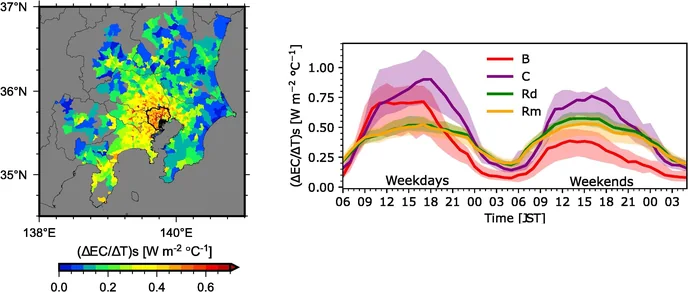
Urban electricity-temperature relationships in the Tokyo Metropolitan Area.
Energy and Buildings,
256,
111729.
doi:
10.1016/j.enbuild.2021.111729
Nakajima, K., Y. Takane , S. Fukuda, K. Yamaguchi, and Y. Kikegawa (2022). Urban electricity-temperature relationships in the Tokyo Metropolitan Area.
Energy and Buildings, 256 , 111729.
https://doi.org/10.1016/j.enbuild.2021.111729.
Sugawara, H., S. Ishidoya, Y. Terao,
Y. Takane, Y. Kikegawa, and K. Nakajima,
2021:
Anthropogenic CO
2 emissions changes in an urban area of Tokyo, Japan due to the COVID-19 pandemic: A case study during the state of emergency in April-May 2020.
Geophysical Research Letters,
48,
e2021GL092600.
doi:
10.1029/2021GL092600
Sugawara, H., S. Ishidoya, Y. Terao, Y. Takane , Y. Kikegawa, and K. Nakajima (2021). Anthropogenic CO 2 emissions changes in an urban area of Tokyo, Japan due to the COVID-19 pandemic: A case study during the state of emergency in April-May 2020.
Geophysical Research Letters, 48 , e2021GL092600.
https://doi.org/10.1029/2021GL092600.
Nakajima, K.,
Y. Takane*, Y. Kikegawa, Y. Furuta, and H. Takamatsu,
2021:
Human behaviour change and its impact on urban climate: Restrictions with the G20 Osaka Summit and COVID-19 outbreak.
Urban Climate,
35,
100728.
doi:
10.1016/j.uclim.2020.100728
Nakajima, K., Y. Takane *, Y. Kikegawa, Y. Furuta, and H. Takamatsu (2021). Human behaviour change and its impact on urban climate: Restrictions with the G20 Osaka Summit and COVID-19 outbreak.
Urban Climate, 35 , 100728.
https://doi.org/10.1016/j.uclim.2020.100728.
Takane, Y., Y. Ohashi, C. S. B. Grimmond, M. Hara, and Y. Kikegawa,
2020:
Asian megacity heat stress under future climate scenarios: Impact of air-conditioning feedback.
Environmental Research Communications,
2,
015004.
doi:
10.1088/2515-7620/ab6933
Takane, Y. , Y. Ohashi, C. S. B. Grimmond, M. Hara, and Y. Kikegawa (2020). Asian megacity heat stress under future climate scenarios: Impact of air-conditioning feedback.
Environmental Research Communications, 2 , 015004.
https://doi.org/10.1088/2515-7620/ab6933.
Takane, Y., Y. Kikegawa, M. Hara, and C. S. B. Grimmond,
2019:
Urban warming and future air-conditioning use in an Asian megacity: Importance of positive feedback.
NPJ Climate and Atmospheric Science,
2,
39.
doi:
10.1038/s41612-019-0096-2
Takane, Y. , Y. Kikegawa, M. Hara, and C. S. B. Grimmond (2019). Urban warming and future air-conditioning use in an Asian megacity: Importance of positive feedback.
NPJ Climate and Atmospheric Science, 2 , 39.
https://doi.org/10.1038/s41612-019-0096-2.
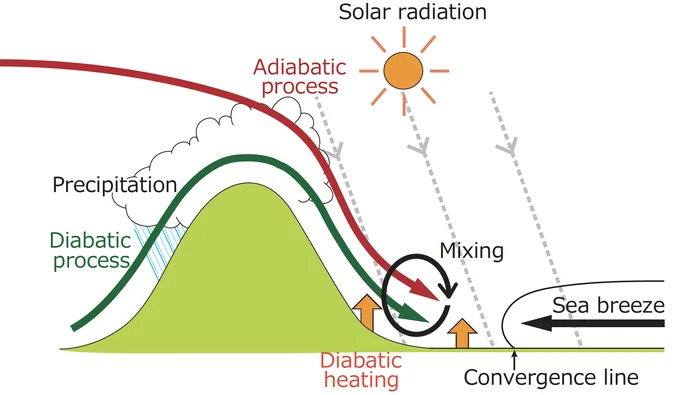
Takane, Y., H. Kondo, H. Kusaka, J. Katagi, O. Nagafuchi, K. Nakazawa, N. Kaneyasu, and Y. Miyakami,
2017:
Foehnlike wind with a traditional foehn effect plus dry-diabatic heating from the ground surface contributing to high temperatures at the end of a leeward area.
Journal of Applied Meteorology and Climatology,
56,
2067–2079.
doi:
10.1175/JAMC-D-16-0257.1
Takane, Y. , H. Kondo, H. Kusaka, J. Katagi, O. Nagafuchi, K. Nakazawa, N. Kaneyasu, and Y. Miyakami (2017). Foehnlike wind with a traditional foehn effect plus dry-diabatic heating from the ground surface contributing to high temperatures at the end of a leeward area.
Journal of Applied Meteorology and Climatology, 56 , 2067–2079.
https://doi.org/10.1175/JAMC-D-16-0257.1.
Takane, Y., Y. Kikegawa, M. Hara, T. Ihara, Y. Ohashi, S. A. Adachi, H. Kondo, K. Yamaguchi, and N. Kaneyasu,
2017:
A climatological validation of urban air temperature and electricity demand simulated by a regional climate model coupled with an urban canopy model and a building energy model in an Asian mega city.
International Journal of Climatology,,
37 (Suppl. 1),
1035–1052.
doi:
10.1002/joc.5056
Takane, Y. , Y. Kikegawa, M. Hara, T. Ihara, Y. Ohashi, S. A. Adachi, H. Kondo, K. Yamaguchi, and N. Kaneyasu (2017). A climatological validation of urban air temperature and electricity demand simulated by a regional climate model coupled with an urban canopy model and a building energy model in an Asian mega city.
International Journal of Climatology,, 37 (Suppl. 1), 1035–1052.
https://doi.org/10.1002/joc.5056.
Takane, Y., H. Kusaka, H. Kondo, M. Okada, M. Takaki, S. Abe, S. Tanaka, K. Miyamoto, Y. Fuji, and T. Nagai,
2017:
Factors causing climatologically high temperatures in a hottest city in Japan: a multi-scale analysis of Tajimi.
International Journal of Climatology,,
37,
1456–1473.
doi:
10.1002/joc.4790
Takane, Y. , H. Kusaka, H. Kondo, M. Okada, M. Takaki, S. Abe, S. Tanaka, K. Miyamoto, Y. Fuji, and T. Nagai (2017). Factors causing climatologically high temperatures in a hottest city in Japan: a multi-scale analysis of Tajimi.
International Journal of Climatology,, 37 , 1456–1473.
https://doi.org/10.1002/joc.4790.
Takane, Y., H. Kusaka, and H. Kondo,
2015:
Investigation of a recent extreme high-temperature event in the Tokyo metropolitan area using numerical simulations: the potential role of a 'hybrid' foehn wind.
Quarterly Journal of the Royal Meteorological Society,
141,
1857–1869.
doi:
10.1002/qj.2490
Takane, Y. , H. Kusaka, and H. Kondo (2015). Investigation of a recent extreme high-temperature event in the Tokyo metropolitan area using numerical simulations: the potential role of a 'hybrid' foehn wind.
Quarterly Journal of the Royal Meteorological Society, 141 , 1857–1869.
https://doi.org/10.1002/qj.2490.
Takane, Y., H. Kusaka, and H. Kondo,
2014:
Climatological study on mesoscale extreme high temperature events in inland of the Tokyo metropolitan area, Japan, during the past 22 years.
International Journal of Climatology,
34,
3926–3938.
doi:
10.1002/joc.3951
Takane, Y. , H. Kusaka, and H. Kondo (2014). Climatological study on mesoscale extreme high temperature events in inland of the Tokyo metropolitan area, Japan, during the past 22 years.
International Journal of Climatology, 34 , 3926–3938.
https://doi.org/10.1002/joc.3951.
Kusaka, H., K. Nawata, A. Suzuki-Parker,
Y. Takane, and N. Furuhashi,
2014:
Mechanism of precipitation increase with urbanization in Tokyo as revealed by ensemble climate simulations.
Journal of Applied Meteorology and Climatology,
53,
824–839.
doi:
10.1175/JAMC-D-13-065.1
Kusaka, H., K. Nawata, A. Suzuki-Parker, Y. Takane , and N. Furuhashi (2014). Mechanism of precipitation increase with urbanization in Tokyo as revealed by ensemble climate simulations.
Journal of Applied Meteorology and Climatology, 53 , 824–839.
https://doi.org/10.1175/JAMC-D-13-065.1.
Takane, Y., Y. Ohashi, H. Kusaka, Y. Shigeta, and Y. Kikegawa,
2013:
Effects of synoptic-scale wind under the typical summer pressure pattern on the mesoscale high-temperature events in the Osaka and Kyoto urban areas by the WRF model.
Journal of Applied Meteorology and Climatology,
52,
1764–1778.
doi:
10.1175/JAMC-D-12-0116.1
Takane, Y. , Y. Ohashi, H. Kusaka, Y. Shigeta, and Y. Kikegawa (2013). Effects of synoptic-scale wind under the typical summer pressure pattern on the mesoscale high-temperature events in the Osaka and Kyoto urban areas by the WRF model.
Journal of Applied Meteorology and Climatology, 52 , 1764–1778.
https://doi.org/10.1175/JAMC-D-12-0116.1.
Kusaka, H., M. Hara, and
Y. Takane,
2012:
Urban climate projection by the WRF model at 3-km grid increment: Dynamical downscaling and predicting heat stress in the 2070's August for Tokyo, Osaka, and Nagoya metropolieses.
Journal of the Meteorological Society of Japan,
90B,
47-64.
doi:
10.2151/jmsj.2012-B04
Kusaka, H., M. Hara, and Y. Takane (2012). Urban climate projection by the WRF model at 3-km grid increment: Dynamical downscaling and predicting heat stress in the 2070's August for Tokyo, Osaka, and Nagoya metropolieses.
Journal of the Meteorological Society of Japan, 90B , 47-64.
https://doi.org/10.2151/jmsj.2012-B04.
Takane, Y., and H. Kusaka,
2011:
Formation mechanisms of the extreme high surface air temperature of 40.9ºC observed in the Tokyo metropolitan area: Considerations of dynamic foehn and foehnlike wind.
Journal of Applied Meteorology and Climatology,
50,
1827-1841.
doi:
10.1175/JAMC-D-10-05032.1
Takane, Y. , and H. Kusaka (2011). Formation mechanisms of the extreme high surface air temperature of 40.9ºC observed in the Tokyo metropolitan area: Considerations of dynamic foehn and foehnlike wind.
Journal of Applied Meteorology and Climatology, 50 , 1827-1841.
https://doi.org/10.1175/JAMC-D-10-05032.1.
Kusaka, H., T. Takata, and
Y. Takane,
2010:
Reproducibility of regional climate in central Japan using the 4-km resolution WRF model.
SOLA,
6,
113-116. doi:
10.2151/sola.2010-029
Kusaka, H., T. Takata, and Y. Takane (2010). Reproducibility of regional climate in central Japan using the 4-km resolution WRF model.
SOLA, 6 , 113-116.
https://doi.org/10.2151/sola.2010-029.
JSPS KAKENHI Grant-in-Aid for Scientific Research (B), GuCM: Integrated framework on multi-scale urban-centered global climate modeling, Project Year: Apri 2025–Mar 2028.
JSPS KAKENHI Grant-in-Aid for Scientific Research (B), GuCM: Integrated framework on multi-scale urban-centered global climate modeling, Project Year: Apri 2025–Mar 2028.
MOE/ERCA Environmental Research and Technology Development Fund, 極端高温等が暑熱健康に及ぼす影響と適応策に関する研究, Project Year: Apri 2023–Mar 2026, Investigator(s): Kazutaka Oka, Yuya Takane, and co-investigators
MOE/ERCA Environmental Research and Technology Development Fund, 極端高温等が暑熱健康に及ぼす影響と適応策に関する研究, Project Year: Apri 2023–Mar 2026, Investigator(s): Kazutaka Oka, Yuya Takane, and co-investigators
JSPS KAKENHI Grant-in-Aid for Scientific Research (A), Establishment of a physical quantitative evaluation for wildfire susceptibility and climate change impact assessment, Project Year: Apri 2024–Mar 2028, Investigator(s): Yoshiya Touge, Tomoaki Nishino, Hiroyuki Kai, Yuya Takane, and Shinya Nakashita, ¥47,710,000
Link
JSPS KAKENHI Grant-in-Aid for Scientific Research (A), Establishment of a physical quantitative evaluation for wildfire susceptibility and climate change impact assessment, Project Year: Apri 2024–Mar 2028, Investigator(s): Yoshiya Touge, Tomoaki Nishino, Hiroyuki Kai, Yuya Takane, and Shinya Nakashita, ¥47,710,000
Link
JSPS KAKENHI Grant-in-Aid for Scientific Research (B), A quantification of classic positive feedback gains caused by anthropogenic heat in the urban-building-energy-climate system, Project Year: Apri 2023–Mar 2027, Investigator(s): Yukihiro Kikegawa, and Yuya Takane, ¥18,070,000
Link
JSPS KAKENHI Grant-in-Aid for Scientific Research (B), A quantification of classic positive feedback gains caused by anthropogenic heat in the urban-building-energy-climate system, Project Year: Apri 2023–Mar 2027, Investigator(s): Yukihiro Kikegawa, and Yuya Takane, ¥18,070,000
Link
JSPS KAKENHI Grant-in-Aid for Scientific Research (A), 見過ごされてきた都会の微生物進化:都市化が微生物を介して自然環境に与える影響, Project Year: Apri 2023–Mar 2026, Investigator(s): Yuya Sato, Mayumi Yoshioka, Kyosuke Yamamoto, Yuya Takane, and Tomohiro Inaba, ¥47,190,000
Link
JSPS KAKENHI Grant-in-Aid for Scientific Research (A), 見過ごされてきた都会の微生物進化:都市化が微生物を介して自然環境に与える影響, Project Year: Apri 2023–Mar 2026, Investigator(s): Yuya Sato, Mayumi Yoshioka, Kyosuke Yamamoto, Yuya Takane, and Tomohiro Inaba, ¥47,190,000
Link
JSPS KAKENHI Fund for the Promotion of Joint International Research (Fostering Joint International Research (B), Global roof albedo database development and its application for urban climate change mitigation and adaptation, Project Year: Oct 2020–Mar 2024, Investigator(s): Yuya Takane, Shiho Onomura, Makoto Nakayoshi, and Masuo Nakano, ¥18,720,000
Link
JSPS KAKENHI Fund for the Promotion of Joint International Research (Fostering Joint International Research (B), Global roof albedo database development and its application for urban climate change mitigation and adaptation, Project Year: Oct 2020–Mar 2024, Investigator(s): Yuya Takane, Shiho Onomura, Makoto Nakayoshi, and Masuo Nakano, ¥18,720,000
Link
JSPS KAKENHI Grant-in-Aid for Scientific Research (B), Hydrological Evaluation of Extreme Dryness Hazard for Large Scale Wildfire, Project Year: Apri 2020–Mar 2024, Investigator(s): Yoshiya Touge, Tomoaki Nishino, Yoshinobu Kido, and Yuya Takane, ¥17,680,000
Link
JSPS KAKENHI Grant-in-Aid for Scientific Research (B), Hydrological Evaluation of Extreme Dryness Hazard for Large Scale Wildfire, Project Year: Apri 2020–Mar 2024, Investigator(s): Yoshiya Touge, Tomoaki Nishino, Yoshinobu Kido, and Yuya Takane, ¥17,680,000
Link
JSPS KAKENHI Grant-in-Aid for Scientific Research (B), The risk assessment of cardiovascular diseases under hot climate conditions and the development of AI-based prediction method, Project Year: Apri 2020–Mar 2024, Investigator(s): Yukitaka Ohashi, Yukihiro Kikegawa, Tomohiko Ihara, and Yuya Takane, ¥17,550,000
Link
JSPS KAKENHI Grant-in-Aid for Scientific Research (B), The risk assessment of cardiovascular diseases under hot climate conditions and the development of AI-based prediction method, Project Year: Apri 2020–Mar 2024, Investigator(s): Yukitaka Ohashi, Yukihiro Kikegawa, Tomohiko Ihara, and Yuya Takane, ¥17,550,000
Link
MOE/ERCA Environmental Research and Technology Development Fund, Development of high accuracy estimation method for carbon and anthropogenic heat emissions with a building energy model and monitoring data, Project Year: Apri 2019–Mar 2022, Investigator(s): Masayuki Hara, Yuya Takane, and co-investigators
MOE/ERCA Environmental Research and Technology Development Fund, Development of high accuracy estimation method for carbon and anthropogenic heat emissions with a building energy model and monitoring data, Project Year: Apri 2019–Mar 2022, Investigator(s): Masayuki Hara, Yuya Takane, and co-investigators
JSPS KAKENHI Grant-in-Aid for Scientific Research (B), Quantification and intercomparison of the positive feedback interaction between urban climate and air-conditioning energy demand in international megacities, Project Year: Apri 2016–Mar 2019, Investigator(s): Yukihiro Kikegawa, Tomohiko Ihara, Yukitaka Ohashi, and Yuya Takane, ¥11,830,000
Link
JSPS KAKENHI Grant-in-Aid for Scientific Research (B), Quantification and intercomparison of the positive feedback interaction between urban climate and air-conditioning energy demand in international megacities, Project Year: Apri 2016–Mar 2019, Investigator(s): Yukihiro Kikegawa, Tomohiko Ihara, Yukitaka Ohashi, and Yuya Takane, ¥11,830,000
Link
Interaction between urban climate and human activities in a mega city, Japan society for the promotion of science: JSPS Postdoctoral Fellowship for Research Abroad, Project Year: Feb 2017–Jan 2019, Investigator(s): Yuya Takane, ¥11,534,000
Interaction between urban climate and human activities in a mega city, Japan society for the promotion of science: JSPS Postdoctoral Fellowship for Research Abroad, Project Year: Feb 2017–Jan 2019, Investigator(s): Yuya Takane, ¥11,534,000
JSPS KAKENHI Grant-in-Aid for Scientific Research (B), Corroborative application of a numerical urban weather forecasting model coupled with a building energy model to prediction of thermal environment and electricity supply-demand in an urban area, Project Year: Apri 2012–Mar 2016, Investigator(s): Yukihiro Kikegawa, Tomohiko Ihara, Yukitaka Ohashi, Minako, Nabeshima, and Yuya Takane, ¥10,530,000
Link
JSPS KAKENHI Grant-in-Aid for Scientific Research (B), Corroborative application of a numerical urban weather forecasting model coupled with a building energy model to prediction of thermal environment and electricity supply-demand in an urban area, Project Year: Apri 2012–Mar 2016, Investigator(s): Yukihiro Kikegawa, Tomohiko Ihara, Yukitaka Ohashi, Minako, Nabeshima, and Yuya Takane, ¥10,530,000
Link
JSPS KAKENHI Grant-in-Aid for Scientific Research (A), Development of a local transport model for CO2 toward the source emission monitoring using GOSAT, Project Year: Apri 2012–Mar 2015, Investigator(s): Hiroaki Kondo, Ichiro Tamagawa, Taku Saitoh, Hrofumi Sugawara, Shigeyuki Ishidoya, and Yuya Takane, ¥47,320,000
Link
JSPS KAKENHI Grant-in-Aid for Scientific Research (A), Development of a local transport model for CO2 toward the source emission monitoring using GOSAT, Project Year: Apri 2012–Mar 2015, Investigator(s): Hiroaki Kondo, Ichiro Tamagawa, Taku Saitoh, Hrofumi Sugawara, Shigeyuki Ishidoya, and Yuya Takane, ¥47,320,000
Link
JSPS KAKENHI Grant-in-Aid for Young Scientists (A), Impact of the windward the ground condition on the high temperature events in urban areas, Project Year: Apri 2014–Mar 2017, Investigator(s): Yuya Takane, ¥23,530,000
Link
JSPS KAKENHI Grant-in-Aid for Young Scientists (A), Impact of the windward the ground condition on the high temperature events in urban areas, Project Year: Apri 2014–Mar 2017, Investigator(s): Yuya Takane, ¥23,530,000
Link
May 2025 Shono Award, Meteorological Society of Japan
May 2025 Shono Award, Meteorological Society of Japan
Sep 2021 Best Paper and Presentation Award, Heat Island Institute International
Sep 2021 Best Paper and Presentation Award, Heat Island Institute International
The 6th International Symposium on Computational Wind Engineering (CWE2014) Poster Award (Takane, Y., H. Kusaka, and H. Kondo, 2014: Mechanisms of foehn wind and a recent record-breaking high temperature in the Tokyo metropolitan area using the WRF model)
The 6th International Symposium on Computational Wind Engineering (CWE2014) Poster Award (Takane, Y., H. Kusaka, and H. Kondo, 2014: Mechanisms of foehn wind and a recent record-breaking high temperature in the Tokyo metropolitan area using the WRF model)
July 2013 Best Paper and Presentation Award, Heat Island Institute International
July 2013 Best Paper and Presentation Award, Heat Island Institute International
July 2008 Best Paper and Presentation Award, Heat Island Institute International
July 2008 Best Paper and Presentation Award, Heat Island Institute International
Takane, Y., T. Nitta, S. A. Adachi, K. Yoshimura, T. Arakawa, M. Nakano, M. Nakayoshi, S. Onomura, and B. Crawford,
2024:
ILS+Urban: an offline land-surface process model for global urban climate and building energy simulations.
American Geophysical Union Annual Meeting (AGU24),
Washington, D.C., USA.
(Poster)
Takane, Y., T. Nitta, S. A. Adachi, K. Yoshimura, T. Arakawa, M. Nakano, M. Nakayoshi, S. Onomura, and B. Crawford,
2024:
ILS+Urban: an offline land-surface process model for global urban climate and building energy simulations.
American Geophysical Union Annual Meeting (AGU24),
Washington, D.C., USA.
(Poster)
Takane, Y., T. Nitta, S. A. Adachi, K. Yoshimura, M. Nakano, M. Nakayoshi, S. Onomura, and B. Crawford,
2024:
ILS+Urban: an offline land-surface process model for global urban climate and building energy simulations.
European Meteorological Society Annual Meeting (EMS2024),
Barcelona, Spain.
(Poster)
Takane, Y., T. Nitta, S. A. Adachi, K. Yoshimura, M. Nakano, M. Nakayoshi, S. Onomura, and B. Crawford,
2024:
ILS+Urban: an offline land-surface process model for global urban climate and building energy simulations.
European Meteorological Society Annual Meeting (EMS2024),
Barcelona, Spain.
(Poster)
Takane, Y., T. Nitta, S. A. Adachi, K. Yoshimura, M. Nakano, M. Nakayoshi, S. Onomura, and B. Crawford,
2024:
ILS+Urban: an offline land-surface process model for global urban climate and energy simulations.
European Geosciences Union General Assembly 2024 (EGU2024),
Vienna, Austria.
(Poster)
Takane, Y., T. Nitta, S. A. Adachi, K. Yoshimura, M. Nakano, M. Nakayoshi, S. Onomura, and B. Crawford,
2024:
ILS+Urban: an offline land-surface process model for global urban climate and energy simulations.
European Geosciences Union General Assembly 2024 (EGU2024),
Vienna, Austria.
(Poster)
Takane, Y., K. Nakajima, K. Yamaguchi, and Y. Kikegawa,
2023:
Electricity consumption in highly populated areas increases non-linearly due to climate change but this can be halved by zero-emission buildings.
6th International Conference on Countermeasures to Urban Heat Islands,
Melbourne, Australia.
(Oral)
Takane, Y., K. Nakajima, K. Yamaguchi, and Y. Kikegawa,
2023:
Electricity consumption in highly populated areas increases non-linearly due to climate change but this can be halved by zero-emission buildings.
6th International Conference on Countermeasures to Urban Heat Islands,
Melbourne, Australia.
(Oral)
Takane, Y., Y. Kikegawa, K. Nakajima, and H. Kusaka,
2023:
SLUCM-BEM: a parameterisation for dynamic anthropogenic heat and electricity consumption for WRF-Urban.
11th International Conference on Urban Climate (ICUC11),
Sydney, Australia.
(Oral)
Takane, Y., Y. Kikegawa, K. Nakajima, and H. Kusaka,
2023:
SLUCM-BEM: a parameterisation for dynamic anthropogenic heat and electricity consumption for WRF-Urban.
11th International Conference on Urban Climate (ICUC11),
Sydney, Australia.
(Oral)
Takane, Y., K. Nakajima, and Y. Kikegawa,
2023:
Urban climate changes during the COVID-19 pandemic: Integration of urban- building-energy model with social big data.
11th International Conference on Urban Climate (ICUC11),
Sydney, Australia.
(Poster)
Takane, Y., K. Nakajima, and Y. Kikegawa,
2023:
Urban climate changes during the COVID-19 pandemic: Integration of urban- building-energy model with social big data.
11th International Conference on Urban Climate (ICUC11),
Sydney, Australia.
(Poster)
Takane, Y., K. Nakajima, Y. Kikegawa, and K. Yamaguchi,
2023:
Social big data help to improvement of an urban canopy and building energy model.
American Meteorological Society 103rd annual meeting (AMS103),
Denver, USA.
(Oral)
Takane, Y., K. Nakajima, Y. Kikegawa, and K. Yamaguchi,
2023:
Social big data help to improvement of an urban canopy and building energy model.
American Meteorological Society 103rd annual meeting (AMS103),
Denver, USA.
(Oral)
Takane, Y., K. Nakajima, and Y. Kikegawa,
2022:
Urban climate changes during the COVID-19 pandemic: Integration of urban building-energy model with social big data.
2022 IAUC Virtual Poster Conference,
Online.
(Poster)
Takane, Y., K. Nakajima, and Y. Kikegawa,
2022:
Urban climate changes during the COVID-19 pandemic: Integration of urban building-energy model with social big data.
2022 IAUC Virtual Poster Conference,
Online.
(Poster)
Takane, Y., K. Nakajima, Y. Kikegawa, H. Sugawara, S. Ishidoya, Y. Terao, K. Yamaguchi, N. Kaneyasu, and M. Hara,
2020:
Off-line urban building energy model reproducibility against ‘observed’ anthropogenic heat and electricity consumption.
European Geosciences Union General Assembly 2020 (EGU2020),
Vienna, Austria.
(Poster)
Takane, Y., K. Nakajima, Y. Kikegawa, H. Sugawara, S. Ishidoya, Y. Terao, K. Yamaguchi, N. Kaneyasu, and M. Hara,
2020:
Off-line urban building energy model reproducibility against ‘observed’ anthropogenic heat and electricity consumption.
European Geosciences Union General Assembly 2020 (EGU2020),
Vienna, Austria.
(Poster)
Takane, Y., Y. Ohashi, C. S. B. Grimmond, M. Hara, and Y. Kikegawa,
2020:
Asian megacity heat stress under future climate scenarios: Impacts of air-conditioning feedbacks.
American Meteorological Society 100th annual meeting (AMS100),
Boston, USA.
(Oral)
Takane, Y., Y. Ohashi, C. S. B. Grimmond, M. Hara, and Y. Kikegawa,
2020:
Asian megacity heat stress under future climate scenarios: Impacts of air-conditioning feedbacks.
American Meteorological Society 100th annual meeting (AMS100),
Boston, USA.
(Oral)
Takane, Y., Y. Ohashi, C. S. B. Grimmond, M. Hara, and Y. Kikegawa,
2019:
Asian megacity heat stress under future climate scenarios: Impacts of air-conditioning feedbacks.
Asia Oceania Geoscience Society 16th annual meeting (AOGS2019),
Singapore.
(Oral)
Takane, Y., Y. Ohashi, C. S. B. Grimmond, M. Hara, and Y. Kikegawa,
2019:
Asian megacity heat stress under future climate scenarios: Impacts of air-conditioning feedbacks.
Asia Oceania Geoscience Society 16th annual meeting (AOGS2019),
Singapore.
(Oral)
Takane, Y., Y. Ohashi, C. S. B. Grimmond, M. Hara, and Y. Kikegawa,
2019:
Asian megacity heat stress under future climate scenarios: Impacts of air-conditioning feedbacks.
European Geosciences Union General Assembly 2019 (EGU2019),
Vienna, Austria.
(Poster)
Takane, Y., Y. Ohashi, C. S. B. Grimmond, M. Hara, and Y. Kikegawa,
2019:
Asian megacity heat stress under future climate scenarios: Impacts of air-conditioning feedbacks.
European Geosciences Union General Assembly 2019 (EGU2019),
Vienna, Austria.
(Poster)
Takane, Y., Y. Kikegawa, M. Hara, and C. S. B. Grimmond,
2019:
Urban warming and future air-conditioning use in an Asian megacity: Importance of positive feedback process.
ITD-ANCST International Workshop on Modeling Atmospheric - Oceanic Processes for Weather and Climate Extremes (MAPEX 2019),
Delhi, India.
(Oral)
Takane, Y., Y. Kikegawa, M. Hara, and C. S. B. Grimmond,
2019:
Urban warming and future air-conditioning use in an Asian megacity: Importance of positive feedback process.
ITD-ANCST International Workshop on Modeling Atmospheric - Oceanic Processes for Weather and Climate Extremes (MAPEX 2019),
Delhi, India.
(Oral)
Takane, Y., Y. Kikegawa, M. Hara, and C. S. B. Grimmond,
2018:
Urban warming and air-conditioning use in a future climate: Evidence of a positive feedback.
10th International Conference on Urban Climate (ICUC10)/14th Symposium on the Urban Environment,
New York, USA.
(Poster)
Takane, Y., Y. Kikegawa, M. Hara, and C. S. B. Grimmond,
2018:
Urban warming and air-conditioning use in a future climate: Evidence of a positive feedback.
10th International Conference on Urban Climate (ICUC10)/14th Symposium on the Urban Environment,
New York, USA.
(Poster)
Takane, Y., Y. Kikegawa, M. Hara, T. Ihara, Y. Ohashi, S. A. Adachi, H. Kondo, K. Yamaguchi, and N. Kaneyasu,
2018:
A climatological validation of urban air temperature and electricity demand simulated by a regional climate model coupled with an urban canopy model and a building energy model in an Asian megacity.
10th International Conference on Urban Climate (ICUC10)/14th Symposium on the Urban Environment,
New York, USA.
(Poster)
Takane, Y., Y. Kikegawa, M. Hara, T. Ihara, Y. Ohashi, S. A. Adachi, H. Kondo, K. Yamaguchi, and N. Kaneyasu,
2018:
A climatological validation of urban air temperature and electricity demand simulated by a regional climate model coupled with an urban canopy model and a building energy model in an Asian megacity.
10th International Conference on Urban Climate (ICUC10)/14th Symposium on the Urban Environment,
New York, USA.
(Poster)
Takane, Y., Y. Kikegawa, M. Hara, and C. S. B. Grimmond,
2018:
Urban warming and air-conditioning use in a future climate: Evidence of a positive feedback.
European Geosciences Union General Assembly 2018 (EGU2018),
Vienna, Austria.
(Oral)
Takane, Y., Y. Kikegawa, M. Hara, and C. S. B. Grimmond,
2018:
Urban warming and air-conditioning use in a future climate: Evidence of a positive feedback.
European Geosciences Union General Assembly 2018 (EGU2018),
Vienna, Austria.
(Oral)
Takane, Y., H. Kondo, H. Kusaka, J. Katagi, O. Nagafuchi, K. Nakazawa, N. Kaneyasu, and Y. Miyakami,
2018:
Foehnlike wind with dry diabatic heating from the ground surface contribute to high temperatures at the end of the leeward area.
International Workshop on Wind-related Disasters and Mitigation (WRDM),
Sendai, Japan.
(Oral)
Takane, Y., H. Kondo, H. Kusaka, J. Katagi, O. Nagafuchi, K. Nakazawa, N. Kaneyasu, and Y. Miyakami,
2018:
Foehnlike wind with dry diabatic heating from the ground surface contribute to high temperatures at the end of the leeward area.
International Workshop on Wind-related Disasters and Mitigation (WRDM),
Sendai, Japan.
(Oral)
Takane, Y.,
2017:
Impact of anthropogenic heat due to air-conditioning use on future urban climate and foehn studies in Japan.
Tsukuba Global Science Week (TGSW) 2017,
Tsukuba, Japan.
(Oral)
Takane, Y.,
2017:
Impact of anthropogenic heat due to air-conditioning use on future urban climate and foehn studies in Japan.
Tsukuba Global Science Week (TGSW) 2017,
Tsukuba, Japan.
(Oral)
Takane, Y., H. Kondo, H. Kusaka, J. Katagi, O. Nagafuchi, K. Nakazawa, N. Kaneyasu, and Y. Miyakami,
2017:
Foehn-like wind with a traditional foehn effect plus dry-diabatic heating from the ground surface contributing to high temperatures at the end of the leeward area.
17th Conference on Mesoscale Processes,
San Diego, USA.
(Poster)
Takane, Y., H. Kondo, H. Kusaka, J. Katagi, O. Nagafuchi, K. Nakazawa, N. Kaneyasu, and Y. Miyakami,
2017:
Foehn-like wind with a traditional foehn effect plus dry-diabatic heating from the ground surface contributing to high temperatures at the end of the leeward area.
17th Conference on Mesoscale Processes,
San Diego, USA.
(Poster)
Takane, Y., Y. Kikegawa, M. Hara, T. Ihara, Y. Ohashi, S. A. Adachi, H. Kondo, K. Yamaguchi, and N. Kaneyasu,
2017:
A climatological validation of urban air temperature and electricity demand simulated by a regional climate model coupled with an urban canopy model and a building energy model in an Asian mega city.
14th International Conference on Atmospheric Sciences and Application to Air Quality (ASAAQ14),
Strasbourg, France.
(Poster)
Takane, Y., Y. Kikegawa, M. Hara, T. Ihara, Y. Ohashi, S. A. Adachi, H. Kondo, K. Yamaguchi, and N. Kaneyasu,
2017:
A climatological validation of urban air temperature and electricity demand simulated by a regional climate model coupled with an urban canopy model and a building energy model in an Asian mega city.
14th International Conference on Atmospheric Sciences and Application to Air Quality (ASAAQ14),
Strasbourg, France.
(Poster)
Takane, Y., H. Kusaka, and H. Kondo,
2015:
Investigation of a recent extreme-high temperature event in the Tokyo metropolitan area using numerical simulations: the potential role of a 'hybrid' foehn wind.
European Geosciences Union General Assembly 2015 (EGU2015),
Vienna, Austria.
(Poster)
Takane, Y., H. Kusaka, and H. Kondo,
2015:
Investigation of a recent extreme-high temperature event in the Tokyo metropolitan area using numerical simulations: the potential role of a 'hybrid' foehn wind.
European Geosciences Union General Assembly 2015 (EGU2015),
Vienna, Austria.
(Poster)
Takane, Y., H. Kusaka, and H. Kondo,
2014:
Mechanisms of foehn wind and a recent record-breaking high temperature in the Tokyo metropolitan area using the WRF model.
The 6th International Symposium on Computational Wind Engineering (CWE2014),
Hamburg, Germany.
(Poster)
Takane, Y., H. Kusaka, and H. Kondo,
2014:
Mechanisms of foehn wind and a recent record-breaking high temperature in the Tokyo metropolitan area using the WRF model.
The 6th International Symposium on Computational Wind Engineering (CWE2014),
Hamburg, Germany.
(Poster)
Takane, Y., H. Kusaka, and H. Kondo,
2014:
Multiphasic analyses of a recent record-breaking high temperature of 39.8ºC in the Tokyo metropolitan area.
94th American Meteorological Society Annual Meeting (11th Symposium on the Urban Environment),
Atlanta, USA.
(Poster)
Takane, Y., H. Kusaka, and H. Kondo,
2014:
Multiphasic analyses of a recent record-breaking high temperature of 39.8ºC in the Tokyo metropolitan area.
94th American Meteorological Society Annual Meeting (11th Symposium on the Urban Environment),
Atlanta, USA.
(Poster)
Takane, Y., and H. Kusaka,
2010:
Formation mechanisms of the extreme high surface air temperature of 40.9ºC observed in the Tokyo metropolitan area.
First International workshop on Nonhydrostatic Numerical Models,
Kyoto, Japan.
(Poster)
Takane, Y., and H. Kusaka,
2010:
Formation mechanisms of the extreme high surface air temperature of 40.9ºC observed in the Tokyo metropolitan area.
First International workshop on Nonhydrostatic Numerical Models,
Kyoto, Japan.
(Poster)
Takane, Y., and H. Kusaka,
2010:
Formation mechanisms of the extremely high surface air temperature of 40.9ºC observed in the Tokyo metropolitan area.
International Workshop on Urban Climate Projection for better Adaptation Plan,
Tsukuba, Japan.
(Poster)
Takane, Y., and H. Kusaka,
2010:
Formation mechanisms of the extremely high surface air temperature of 40.9ºC observed in the Tokyo metropolitan area.
International Workshop on Urban Climate Projection for better Adaptation Plan,
Tsukuba, Japan.
(Poster)
Asian Journal of Atmospheric Environment (Asian Association for Atmospheric Environment)
Asian Journal of Atmospheric Environment (Asian Association for Atmospheric Environment)
Asia-Pacific Journal of Atmospheric Sciences (Korean Meteorological Society)
Asia-Pacific Journal of Atmospheric Sciences (Korean Meteorological Society)
Atmospheric Science Letters (Royal Meteorological Society)
Atmospheric Science Letters (Royal Meteorological Society)
Climate Services(Elsevier)
Climate Services(Elsevier)
Communications Earth & Environment(Springer Nature)
Communications Earth & Environment(Springer Nature)
Earth System Science Data (European Geoscience Union)
Earth System Science Data (European Geoscience Union)
Environmental Research Letters (Institute of Physics)
Environmental Research Letters (Institute of Physics)
Environmental Pollution(Elsevier)
Environmental Pollution(Elsevier)
Environmental Science & Technology (American Chemical Society)
Environmental Science & Technology (American Chemical Society)
Geografisk Tidsskrift-Danish Journal of Geography (Royal Danish Geographical Society)
Geografisk Tidsskrift-Danish Journal of Geography (Royal Danish Geographical Society)
Geoscientific Model Development (European Geoscience Union)
Geoscientific Model Development (European Geoscience Union)
International Journal of Climatology (Royal Meteorological Society)
International Journal of Climatology (Royal Meteorological Society)
Joule(Cell Press)
Joule(Cell Press)
Journal of Advances in Modelling Earth Systems (American Geophysical Union)
Journal of Advances in Modelling Earth Systems (American Geophysical Union)
Journal of Applied Meteorology and Climatology (American Meteorological Society)
Journal of Applied Meteorology and Climatology (American Meteorological Society)
Journal of Climate (American Meteorological Society)
Journal of Climate (American Meteorological Society)
Journal of Geophysical Research - Atmosphere (American Geophysical Union)
Journal of Geophysical Research - Atmosphere (American Geophysical Union)
Journal of the Meteorological Society of Japan (Meteorological Society of Japan)
Journal of the Meteorological Society of Japan (Meteorological Society of Japan)
Meteorologische Zeitschrift (Meteorological societies of Austria, Germany and Switzerland)
Meteorologische Zeitschrift (Meteorological societies of Austria, Germany and Switzerland)
Nature Sustainability(Springer Nature)
Nature Sustainability(Springer Nature)
Quarterly Journal of the Royal Meteorological Society (Royal Meteorological Society)
Quarterly Journal of the Royal Meteorological Society (Royal Meteorological Society)
Scientific Online Letters on the Atmosphere (Meteorological Society of Japan)
Scientific Online Letters on the Atmosphere (Meteorological Society of Japan)
Urban Climate(Elsevier)
Urban Climate(Elsevier)
Weather and Climate Extremes (Elsevier)
Weather and Climate Extremes (Elsevier)
Weather, Climate, and Society (American Meteorological Society)
Weather, Climate, and Society (American Meteorological Society)
Tenki (Meteorological Society of Japan)
Tenki (Meteorological Society of Japan)
Journal of Heat Island Institute International (Heat Island Institute International)
Journal of Heat Island Institute International (Heat Island Institute International)
Proceedings of National Symposium on Wind Engineering (Japan Association for Wind Engineering)
Proceedings of National Symposium on Wind Engineering (Japan Association for Wind Engineering)